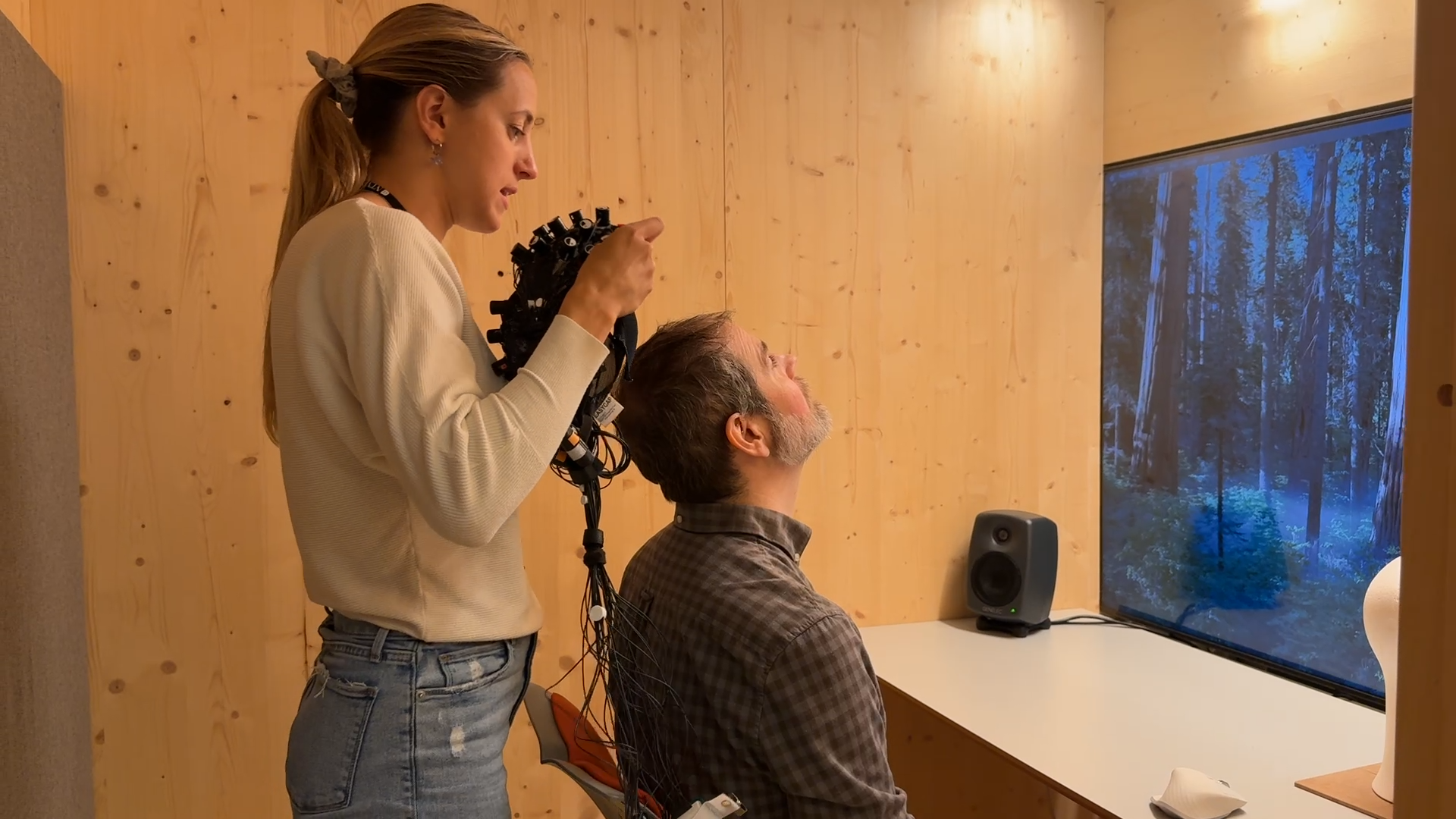
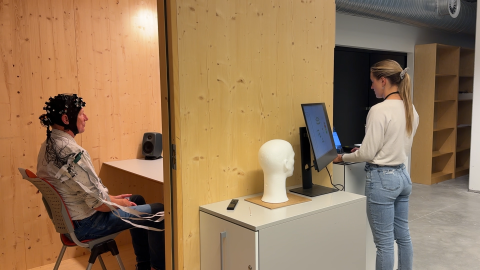
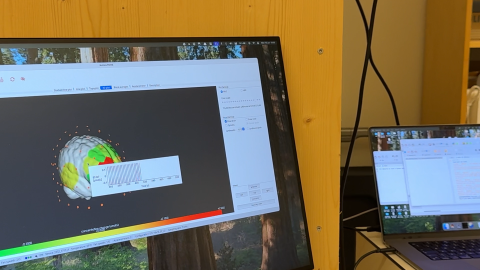
Using a brain-imaging tool called functional Near-Infrared Spectroscopy (fNIRS), the team monitored brain activity in regions associated to hearing, vision, and decision making. Over thirty volunteers participated, wearing an fNIRS cap while experiencing carefully calibrated low-frequency noise and synchronised video footage of wind turbines. The experimental setup was designed for precision and reproducibility, allowing researchers to gather data on how the brain responds to these environmental stimuli.
This pilot study supports WoodStock in developing zero-waste solutions for healthy living. By examining how people neurologically respond to auditory and visual stimuli from wind turbines, the research provides a strong foundation for future studies on how multisensory interactions, such as sound, sight and material preference affect human comfort and well-being. These insights are essential for designing environments that are not only sustainable but also cognitively and emotionally supportive.