Rotterdamskrom brings together municipalities, green contractors, and builders in a collaborative system. At its core is a digital tool that uses existing ‘tree passports’: municipal records of urban trees, detailing their species, size, condition and location. These records are maintained through regular inspections, and stored in digital tree management systems (e.g. Tree Asset Management software) that are used by cities like Rotterdam, Amsterdam and Utrecht.
The right wood for the right use - rethinking circular construction
A data-driven system matching urban trees to construction needs in the Netherlands
Every year, cities across the Netherlands fell thousands of trees due to age, disease, or urban development. Most of this wood is chipped, burnt or forgotten. Estimates suggest that around 3 million cubic metres of wood become available each year in the Netherlands. This is enough to build over 100,000 timber-framed homes using local materials. What if we could turn this overlooked wood resource into a circular construction system? That is what Jasper Smit, a 25-year-old entrepreneur from Rotterdam, has set out to do.
Jasper’s start-up, Rotterdamskrom, is developing a data-driven system that connects urban wood to construction needs, matching the right wood to the right use. Rotterdamskrom lays the groundwork for a smarter, more sustainable way of building, by coordinating data, logistics and collaboration across the supply chain.
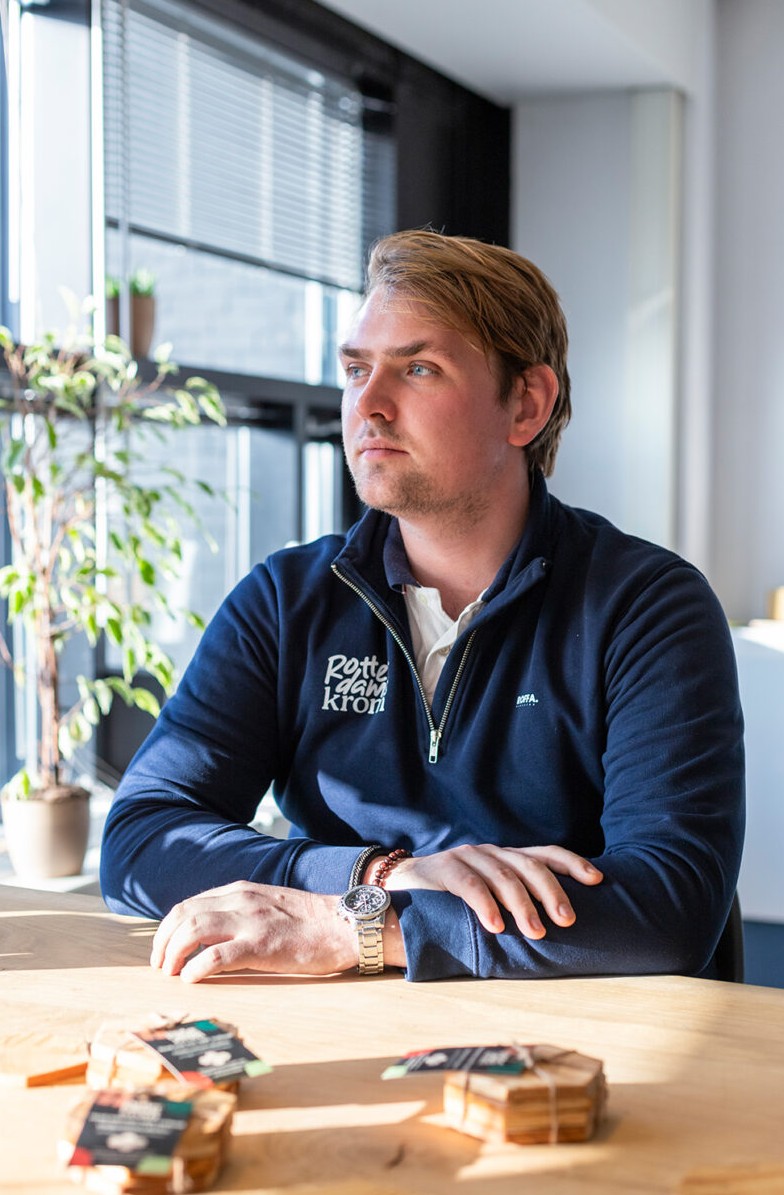
Jasper Krom, co-founder Rotterdamskrom
“The system offers a practical path to circular construction at a local level. It connects urban wood to building projects through data, collaboration and design. This helps to reduce CO₂ emissions, lower material costs, and build more resilient cities, using what’s already available. This model forms a pioneering, innovative system that can be used as an example for other European cities and countries.”
Tree passports
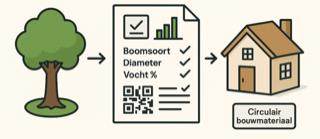
By analysing data from these records, the system can match wood characteristics of felled trees to construction applications, steering how the wood should be processed and where it can be used. The use of AI could enhance this process by handling complex variables, for example determining which wood is suitable for structural use and which for finishing. This maximises material efficiency and ensures that no wood is undervalued or wasted. The system embraces wood diversity while enabling standardised designs for cost efficiency. After speaking with municipalities, green contractors and builders, Jasper noticed a strong interest in using local materials, but also a clear need for coordination. That is where Rotterdamskrom steps in as a chain coordinator, managing projects and facilitating collaboration across the supply chain.
Ready for pilot testing
While the system is ready for pilot testing, Rotterdamskrom is facing some familiar challenges. Many say, “First show us that this works”. But that puts us in a classic ‘chicken-and-egg’ situation,” Jasper explains. “Another challenge lies in education and behavioural change. Builders need training to work with diverse wood types. The system will therefore include building guidelines that can ease adoption and help build confidence. Logistics also play a role. For example, while a lot of wood is discarded in the west of the Netherlands, housing shortages are more acute in the east. Efficient transport solutions will be key to scaling the system nationally.
Funding may help to overcome the challenges that Rotterdamskrom is facing. Jasper has first explored the system through the TopOpTop project, in collaboration with Delft University of Technology (TU Delft), Superuse Studios, and Plennid. Together, they investigated the structural potential of local wood types and the regulatory frameworks that surround their use in construction. TU Delft has provided theoretical insights, such as strength classification and material behaviour, while Rotterdamskrom has contributed with practical experience.
"While Rotterdamskrom focuses on matching urban wood resources to construction needs in the Netherlands, WoodStock conducts research into underutilised wood resources across Europe, including hardwood, low-quality wood, post-consumer wood, and damaged wood. Initiatives like Rotterdamskrom provide concrete examples of local circular systems in action."

Stijn Brancart, assistant professor circular timber structures
Department of Architectural Engineering + Technology, TU Delft
Illustration of Material Flow Analysis
TU Delft is also a consortium partner in the WoodStock project, which brings together organisations, industry representatives, government agencies, and citizens to accelerate the shift towards circular practices in the wood construction sector. Rotterdamskrom helps to illustrate the kinds of wood flows that WoodStock will model in its Material Flow Analysis (MFA), to help map, quantify and characterise wood resources. This research supports the development of climate-smart solutions to increase the use of underutilised wood in the European construction sector.
Rotterdamskrom is reshaping the way we think about building with wood. For architects, this opens doors to creative designs using local materials. It shows builders that thoughtful use of urban wood can reduce waste and material costs. To students, it offers a chance to be part of the next generation of circular construction.